Creative Catalyst Productions Interview

Q & A Inspiration and Working Methods
Monday, October 19, 2015
Happy painting!
Linda
The nice people at Creative Catalyst Productions are now carrying some of my instructional DVDs! We did an interview which has been posted to their blog but incase you missed it, here it is...
Linda Kemp - What inspires you?
Posted October 12 2015 by Creative Catalyst blog :http://ccpvideos.com/blogs/news/57708293-linda-kemp-what-inspires-you
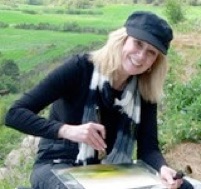
Creative Catalyst is pleased to carry a number of Linda Kemp’s Video workshops. We wanted to get to know Linda better so here is our recent interview along with some of her recent paintings
Linda, what inspires you to paint? I get a kick out of figuring out how things fit together or “work”. Sorting through design and colour options are like working on a multi-layered puzzle. The idea for a particular puzzle begins with something thrilling that I might see on an every-day adventure.
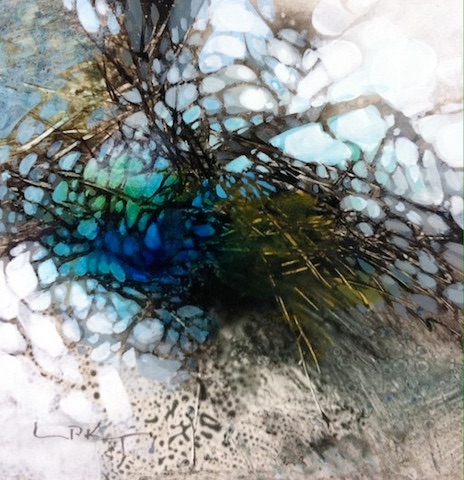
Which mediums do you use? Like so many of us I have tried my hand at a lot of artsy activities: printmaking, drawing, pottery, stained glass, weaving, small constructions and playing the piano badly. However about thirty years ago I made the decision to devote my time to painting and packed up everything else and passed them on to a Woman’s group. What a relief! These days I work with watercolour, acrylic and only enough photography to collect ideas for paintings, document my artwork and adventures.
What is your studio like? Organized chaos! I have designated areas for watercolour and acrylic, as well as space for a copy-stand for photographing art. I also have a room for framing and storage. It helps me to keep activities separate. Although my studio is a reasonable size, there is never enough storage space and stacks of paintings are squeezing me out!
What are your favorite painting tools? I don’t use anything fancy or out of the ordinary.
I usually reach for a big prickly brush and loads of fresh-squeezed paint. I generally paint on a flat table and the acrylics are often finished on an up-right easel. I use a large piece of plexiglas on my table-top for my watercolors.
What is the hardest step for you in the process of creating art? The only thing harder than getting started in the morning is stopping at night! I’ve had to make a rule for myself not to begin any new projects after 10:00pm and to clean my brushes at 11:00. Sometimes I obey.
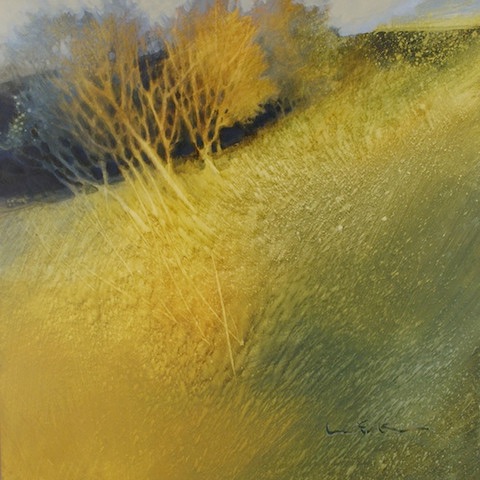
Many artists have a compulsion to repeat subject matter- have you found yourself doing this? What is your personal challenge when you continue to repeat this subject? If the subject matter of my paintings is labeled as “Trees as seen from close-up and in the distance” then I certainly do repeat myself! However I consider the depiction of these things as secondary to the true subject matter of my work, specifically exploring colour and design concepts. Trees, leaves and the south field are simply objects I use to hang my ideas on.
What is the best advice you ever received? Words of advice that made a big impact are related to my career as an art instructor/writer.
Upon seeing some of my promotional material, my dear friend, the late Jack Reid proclaimed “Linda, that’s not good enough.” At a later date he announced “If you are going to write a book, write a book!” Beyond dolling out a big kick in the pants, Jack followed up with advice that gave direction in the preparation of a complete manuscript for presentation to a publisher, rather than a standard proposal which usually includes an outline and sample chapter. He also showed me how to create a “story board” so I could visualize the layout and page plan. Jack freely shared his hard-earned knowledge about many facets of the business of art and I am truly grateful.
What advice would you give? I won’t venture to suggest painting tips! And so I will comment on receiving critique as someone who has been on both sides of the taking and giving:
Learn to listen, especially when you don’t like what you are hearing. If you don’t understand a statement ask for more explanation. Take some time to consider any suggestion before deciding if it is valid or not. It is rarely helpful to become defensive about the work. It simply is what it is - something you made - it is not about you personally!
Comments offered by others (even non-painters or unsolicited) give you insight into how others perceive your work. It is important to paint to please yourself first, but you might learn something valuable through the eyes of someone else.
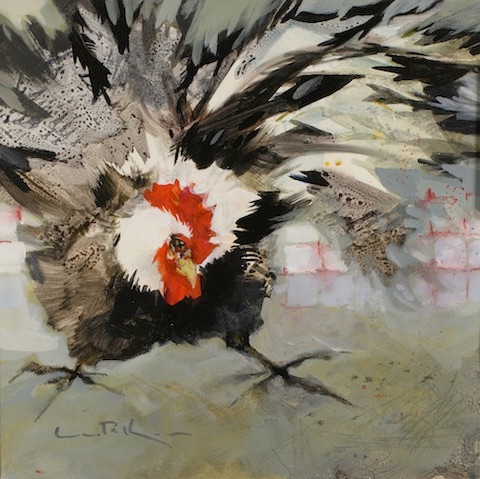
Where are you going next with your art? It would be great to know where I am going next with my work, then I wouldn’t have to struggle through every step to get there! Currently I am working with acrylic on Claybord and large Matte Mylar sheets. These days birds often find their way into my work. I don’t wish to portray them as sweet and delicate, rather it is their saucy character and strength I wish to accentuate.
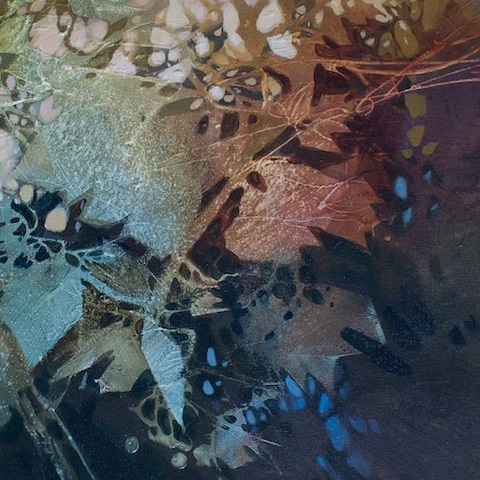
I also find myself intrigued with the intricate tangles of twigs and grass in their nests which are often tucked away in a hidden corner.
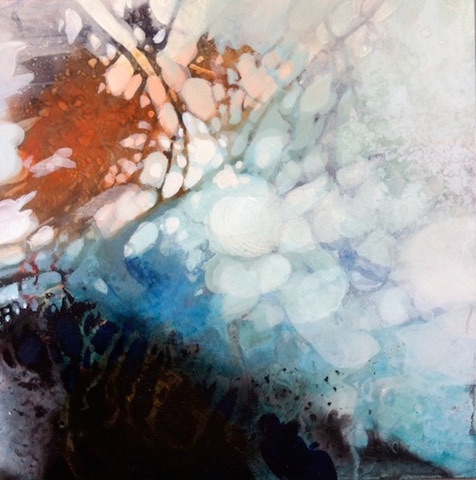
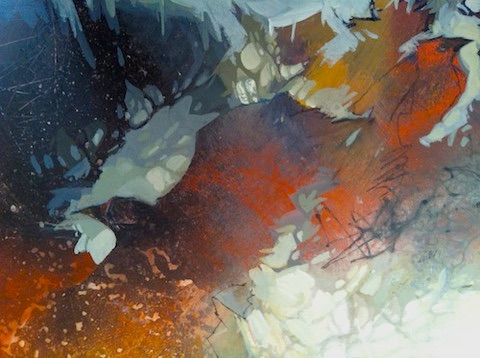
For some time I have been concentrating on simplifying my images to their most basic shapes and using restraint within a chosen colour concept. In particular the focus of much of my painting lately is an attempt to establish a visual shimmer with cool and warm whites. It’s a subtle effect that I am after and proving to be a great challenge!
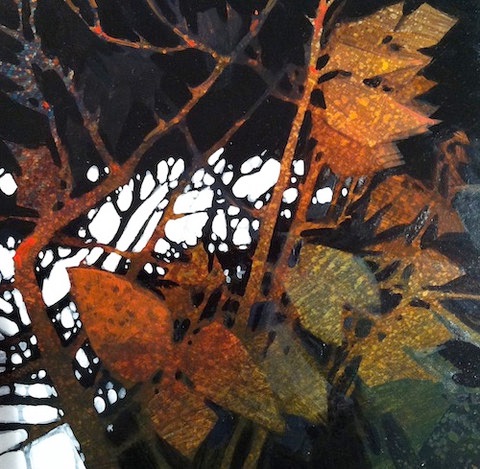
What attracts you to and makes you admire others work? i.e. subject/style/medium I look for a unique point of view, expressed in a personal and sincere way in the work of other artists. I am drawn to pieces that reveal a sensitivity to whatever the subject is, regardless of style, medium or technical skill.
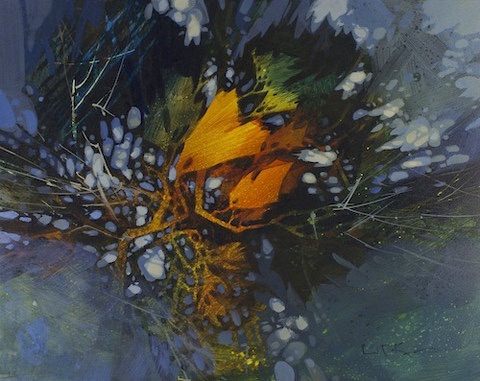
What is your most special piece of art in your home that is not yours?
Why is it so special? I’ve been hunting treasures of art, curiosities and antiques for years. I have very few of my own paintings on the walls as my living space is filled with a collection of other artist’s and craftsmen’s creations. Each piece inspires and intrigues me in some way, so it is hard to choose just one! I suppose the most special at any moment would be the most recent find. It could be a painting, a delicate hummingbird’s nest or a great, knobby stick. Today it is an amazing prosthetic eye!
However, I do plan to be buried wrapped in the large Christopher Schink water-media painting, Seated Girl - Waiting, that I have in my living room. Yes, I plan to take it with me.
What inspires you to keep creating? I’m convinced it is simply my overwhelming obsession - there is no cure.
How do you know when to quit a painting? I think the decision to call a painting “finished” depends on what your goal is - or why you paint. I work to solve a painting problem or learn something. So If I have accomplished this, then I am satisfied and often inspired to take the next project a step further.
I believe that students often stop too soon out of concern of “overworking” or ruining their painting. We worry that the piece will lose its freshness or become muddy. Unfortunately this means that sometimes the painting doesn’t reach its full dynamic potential. I would like to encourage painting students to push their work past what they feel is “safe”!
For myself I believe that If I don’t know that it is finished - it isn’t!
You have mentioned your love of shapes. How can we as artists train ourselves to see shapes better and explore their application in our art?
In general, how can we improve our compositional skills? Good shapes and descriptive edges are essential when working in the negative! As “Negative Painters” we rely on our shapes and edges to tell the story and provide information rather than the inside details. While gradation of colour and shading are typically used to show volume, negative painters usually work with flatter forms and indicate depth by overlapping and size change.
To become a better shape-maker you will need to be more observant of forms - this means not getting distracted by colour, texture and inside details. Instead concentrate on the subject as a collection of basic shapes that lock together. Arrange, simplify and stylize the basic shapes for better composition and design.
You also mention your love of color. Do you have a particular philosophy about using color, for example, limited palette? Before I begin a painting I select a colour concept to focus on; for example, this could be an analogous, complementary or monochromatic colour scheme. I then choose the tubes of paint that fit into this plan and work with a limited palette. My motto for ensuring colour harmony is “The colours I start with are the colours I use to build and finish the work” . The trouble starts when we add something new to a piece that is partly finished.
What are the top three techniques you believe watercolorists should master? To become proficient at watercolour one must devote a lot of time to practice! There are no shortcuts, but isn’t that true with so many skills?
I would suggest that a student explore and experiment to discover what the pigments will do when combined and encouraged to intermingle rather than over-mixing.
I recommend that all painting students take a class in Chinese Brush Painting or Tole Painting to learn how to effectively handle a brush and load colour.
My final recommendation is to reduce the amount of water in a mix. Gobs and direct applications of paint are glorious!
Linda Kemp

